Cut My Family’s Morning Chaos in Half: How a Simple Camera System Changed Everything
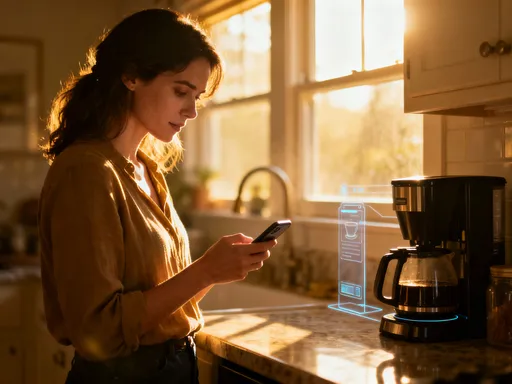
Mornings used to feel like a tornado—shoes missing, lunches forgotten, and someone always late. I was constantly stressed, shouting from room to room just to keep things moving. Then I tried something simple: a home monitoring system I could check from my phone while making coffee. No wires, no tech headache—just peace of mind. Within days, our rhythm changed. Now, I see what’s happening before chaos spreads. It’s not about watching—it’s about breathing easier.
The Breaking Point: When Mornings Felt Out of Control
There was a time when I thought I just needed more time. More time to get ready, more time to pack lunches, more time to remind everyone about homework, permission slips, gym shoes, toothbrushing. But the truth was, I didn’t need more time—I needed better awareness. Every morning felt like I was playing catch-up before the day even began. I’d be standing at the counter with one hand on the coffee pot and the other holding a missing sock, calling out, “Who left their science project on the dining table?!” only to be met with silence or, worse, “I thought someone else put it in the backpack!”
The stress wasn’t just about being late. It was about feeling disconnected. I was physically present, but emotionally scattered—trying to be in five places at once. I’d walk into a room and forget why I was there. I’d send the kids off with half-zipped coats and peanut butter still on their cheeks, feeling like I’d failed before the school bell even rang. And I know I’m not alone. So many of us are running on autopilot, fueled by adrenaline and caffeine, just trying to keep the ship from sinking.
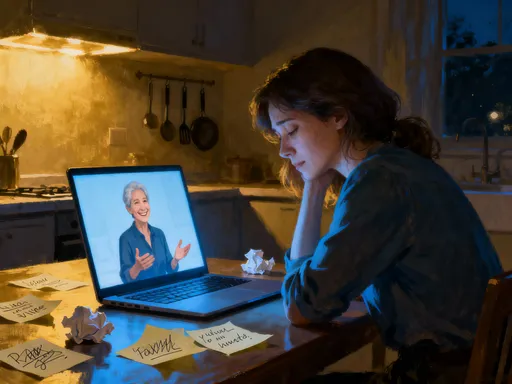
One particularly rough morning, my youngest forgot her library book, my oldest missed the bus, and I spilled coffee on my only clean blouse. I sat on the kitchen floor, surrounded by lunchboxes and backpacks, and cried. Not because any of it was catastrophic—but because it all felt so heavy. That’s when I realized I wasn’t looking for a miracle. I wasn’t looking for a new planner or a chore chart. I was looking for a way to *see*—to know what was happening without having to be everywhere. And that’s how I started looking into home monitoring—not as a security tool, but as a tool for connection.
Finding a Calm in the Chaos: Discovering Home Monitoring
I’ll admit, I had assumptions. When I heard “home camera,” I pictured something out of a spy movie—motion alerts, night vision, red blinking lights. I thought it was for people worried about break-ins or pet sitters they didn’t trust. But then I had coffee with my friend Lena, and she casually mentioned how she uses a small camera in her hallway just to check if her daughter is awake. “I see she’s up, I don’t have to knock. She sees me on the screen and says good morning. It’s sweet, actually,” she said.
That stuck with me. It wasn’t about surveillance. It was about awareness. It was about reducing the guessing, the shouting, the unnecessary interruptions. I started researching systems that were simple, private, and designed for everyday family life—not for tech geeks or security experts. What I found surprised me. There are cameras now that are built for real homes, real parents, real mess. No complicated setup. No monthly fees. Just a small device that connects to your Wi-Fi and shows you a live view on your phone.
I liked that it wasn’t about recording every moment. Most of these systems offer live viewing only, with optional local storage—meaning footage stays on a little card inside the camera, not floating in the cloud somewhere. No facial recognition. No AI analyzing your child’s behavior. Just a window into your home, available when you need it. I realized this wasn’t about control. It was about care. It was about being able to check in—without checking out of my own morning.
A System That Fits Real Life: No Tech Skills Required
If I’m honest, my biggest fear wasn’t privacy—it was frustration. I didn’t want to spend an entire Sunday afternoon trying to pair a device, only to give up and shove it in a drawer. I’ve been there with smart lights, voice assistants, even a robotic vacuum that got stuck under the couch for three days. So when I unboxed the camera, I held my breath.
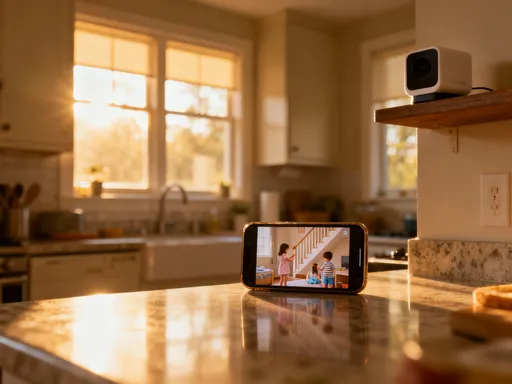
But within five minutes, it was up and running. Plug it in. Open the app. Scan the QR code. Connect to Wi-Fi. Done. The interface was so simple—just a big button to view live feed, a microphone icon to talk through the speaker, and a mute button for when I didn’t want the kids hearing me mutter, “Why is there glitter on the ceiling?” The whole family could use it. My husband used it to check if the dog had finished eating. My mom, visiting for the weekend, used it to see if the baby was stirring before she got up.
And the best part? It didn’t look like a piece of tech. It was small, matte white, with a soft lens cover. I placed it high on a bookshelf in the hallway—neutral, unobtrusive, almost invisible unless you were looking for it. It didn’t scream “surveillance.” It whispered, “I’m here if you need me.” That mattered. Because the last thing I wanted was for my kids to feel watched. I wanted them to feel safe. And slowly, that’s what it became—a quiet presence, not a constant monitor.
How It Changed Our Daily Rhythm: Small Shifts, Big Impact
The change didn’t happen overnight, but it happened fast. On the second morning, I was making toast when I glanced at my phone and saw my daughter standing in front of her closet, still in pajamas, staring at her clothes like they’d betrayed her. Instead of yelling, “Hurry up! You’re going to miss the bus!” I tapped the talk button and said, “Hey, try the blue shirt—it’s already out.” She smiled, put it on, and was downstairs two minutes later.
That small moment changed everything. I wasn’t the nagging voice from downstairs. I was the helper who could see and support. I started using it to catch things before they became problems. If I saw someone eating cereal without a bowl, I’d say, “Bowl, please!” through the speaker. If I noticed a backpack unzipped, I’d remind them to check for homework. It wasn’t about micromanaging—it was about guiding. And the kids responded. They started using it too. “Mom, check the camera—did I leave my water bottle in the bathroom?” or “Can you tell if the dog is scratching the rug again?”
Even our tone in the house changed. Fewer raised voices. Fewer “I told you so” moments. I wasn’t chasing anyone down the hall. I was in the kitchen, calm, caffeinated, and in the loop. The system didn’t replace parenting. It gave me space to parent better. I could respond instead of react. I could be patient instead of panicked. And that made all the difference.
Beyond Mornings: Peace of Mind Throughout the Day
I thought the camera would be a morning tool. But it quickly became a part of our whole day. When I started working from home a few days a week, I could glance at the screen during a meeting break and see my youngest curled up with a book. No need to interrupt her. No need to worry. She was safe, settled, and happy.
After school, I could see the moment the kids walked in the door. No more calling out, “Did you get home okay?” or texting, “Are you inside?” I could see their backpacks drop, their shoes kick off, their after-school snacks appear. If one of them went straight to their room, I could check in gently: “Everything okay?” instead of barging in.
And when we had a babysitter for the first time in months, I didn’t spend the evening refreshing a security app. I could see the kids playing board games, laughing, the dog snoozing at their feet. The sitter was calm, the house was peaceful, and I could actually enjoy dinner with my husband. I wasn’t absent. I was just… not hovering. That’s the gift of this kind of tech—not constant monitoring, but occasional reassurance. It lets you be present in your own life while knowing your family is okay.
Privacy Without Paranoia: Keeping It Simple and Respectful
I know what you might be thinking. Isn’t this an invasion of privacy? Isn’t it a little… much? I asked myself the same thing. That’s why we set clear boundaries from the start. No cameras in bedrooms. No cameras in bathrooms. The one in the hallway covers the top of the stairs, the kids’ bathroom door, and the living room entrance—nothing more. We talked about it as a family. We explained why we were using it—not to spy, not to catch anyone doing something wrong, but to help us stay connected and reduce stress.
The system we chose doesn’t record by default. It only saves clips if you tap “save” during live view. No cloud storage. No third-party access. The data stays on a microSD card inside the camera, which I can remove anytime. And we made it a rule: no watching the kids while they’re sleeping unless someone’s sick or we’re worried. It’s not about control. It’s about care.
Over time, it stopped feeling like a camera and started feeling like a part of the home—like the toaster or the doorbell. The kids don’t act differently when it’s on. They wave. They make silly faces. They say, “Mom, the camera sees you!” It’s not a source of tension. It’s a source of comfort. And that, to me, is the sign it’s being used the right way.
A Calmer Home, A Clearer Mind: The Real Gift of Ease
When I look back at those chaotic mornings, I don’t just remember the stress—I remember how powerless I felt. Like no matter how hard I tried, I couldn’t stay ahead of the mess. But this simple camera didn’t just give me eyes on the house. It gave me space in my mind. Space to breathe. Space to choose how I responded. Space to be the mom I wanted to be—not the one running on fumes.
Our home isn’t perfect. The dog still sheds. The kids still argue over who used the last yogurt. Backpacks still end up in the middle of the floor. But the energy is different. It’s lighter. Calmer. I’m not shouting from the kitchen. I’m not chasing anyone. I’m present—really present—because I don’t have to be everywhere at once.
Technology gets a bad rap sometimes. We hear about screen time, distractions, kids glued to devices. And yes, balance matters. But not all tech pulls us apart. Some of it, when designed with care and used with intention, quietly holds us together. This little camera didn’t fix everything. But it gave us something priceless: ease. And in a world that feels louder and faster every day, ease might be the most revolutionary thing of all.